Spine Manthan 2026
 An Annual Meeting of Academic Excellence, Family, Fellowship and Service
Mandawa, Rajasthan | 28–30 March 2026
The Spine Society Delhi Chapter (SSDC) has always believed that a professional society is much more than its academic programmes. It is a community of colleagues, friends and families, united by a common commitment to spine care, education and service. Spine Manthan 2026, the Annual Meeting of the Spine Society Delhi Chapter, held from 28 to 30 March 2026 in Mandawa, Rajasthan, beautifully reflected this philosophy.
Originally planned as a trip to Georgia, the programme had to be shifted to Mandawa because of the prevailing circumstances. What could have been a logistical challenge instead became an opportunity to create an intimate and distinctive heritage experience, combining academic engagement with culture, family bonding and community service.
The three-day programme at Castle Mandawa brought together spine surgeons, their families and members of the Society in an atmosphere that was relaxed, intellectually stimulating and distinctly Rajasthani. The official programme described Spine Manthan as a two-day academic and social gathering designed around scientific discussions, case-based learning, interactive sessions, networking and cultural engagement. The brochure also incorporated a charitable initiative and spine-health outreach programme. Final SSDC Brochure Mandawa
A Journey Together
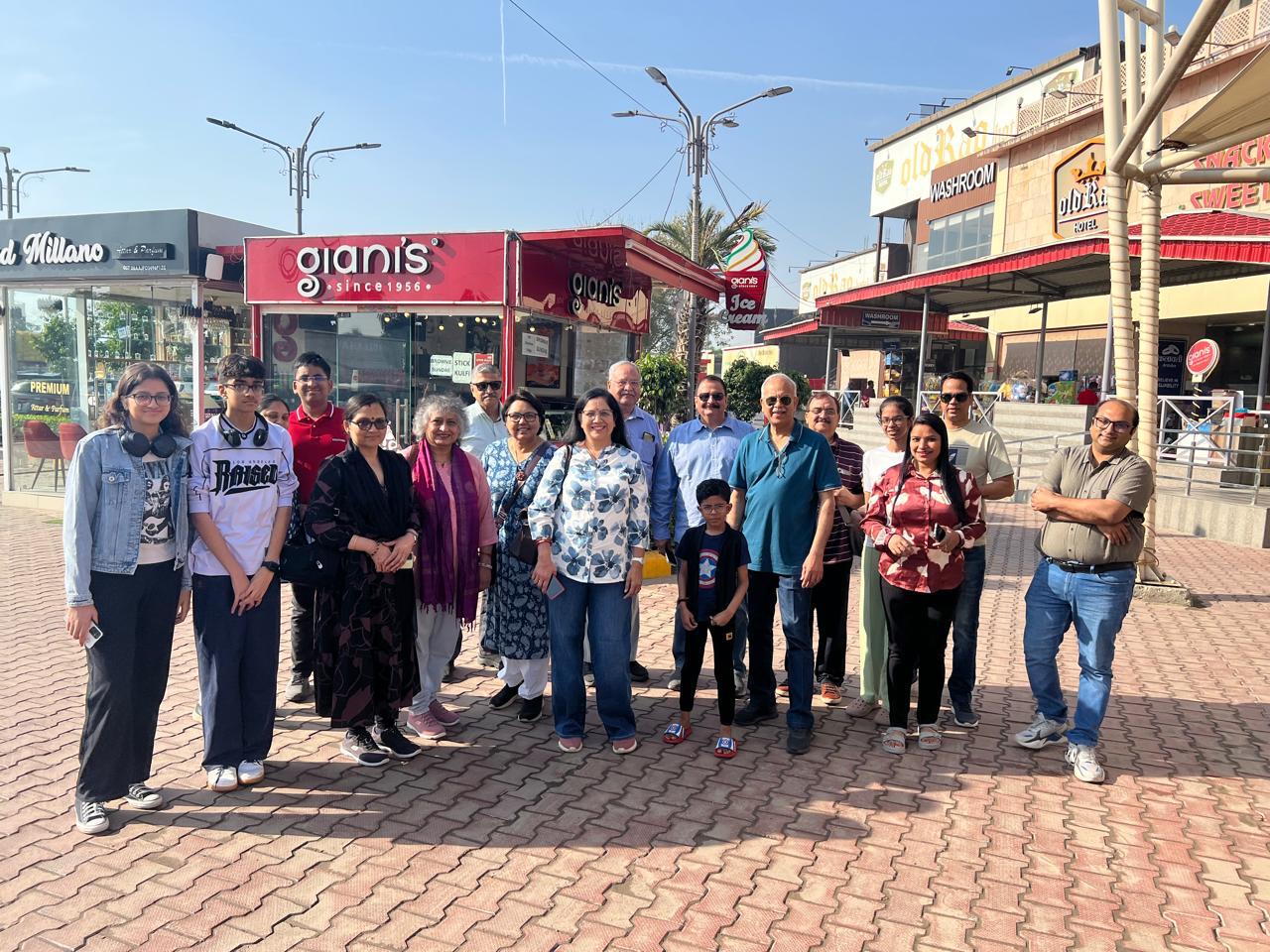
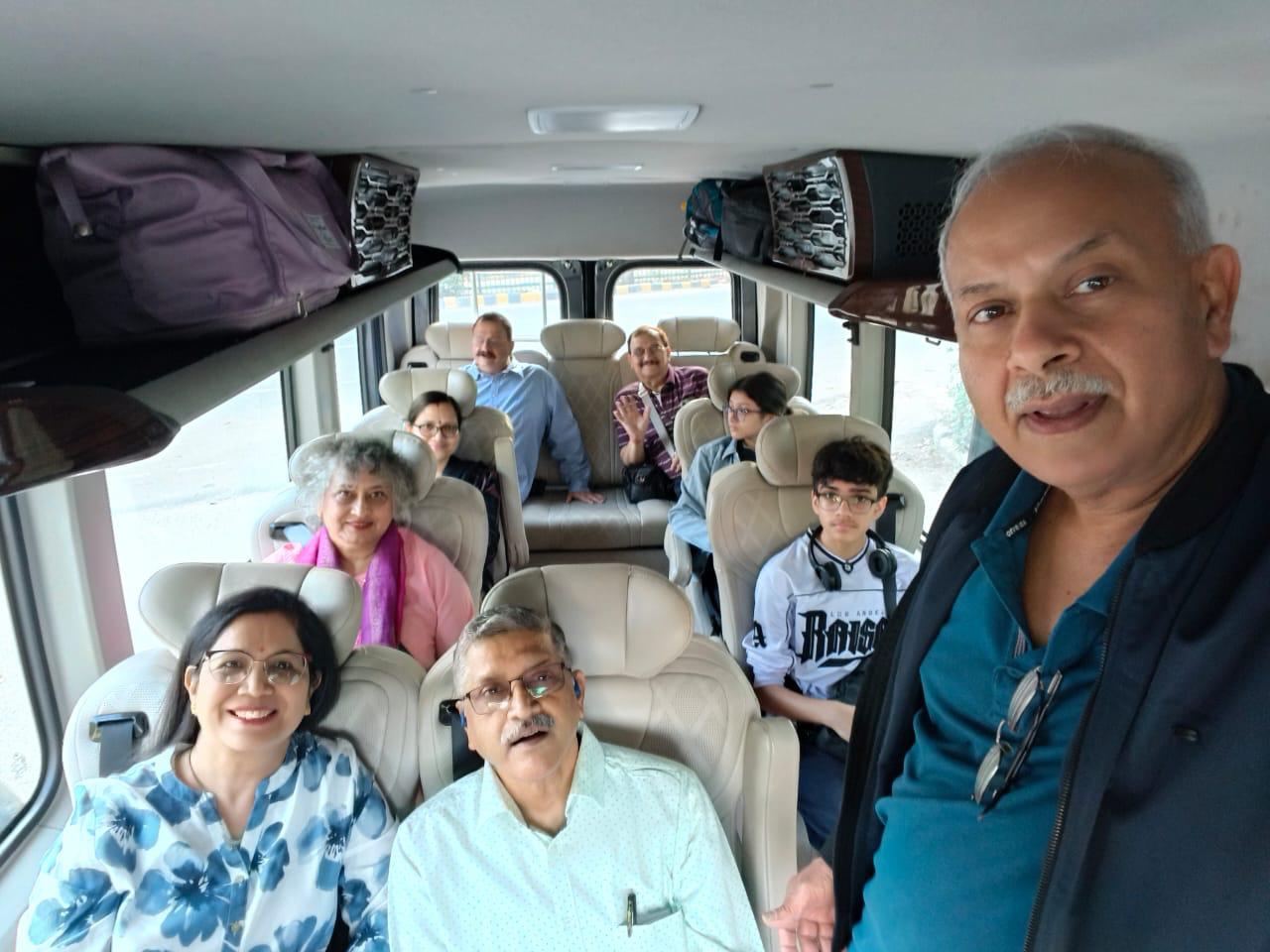
Members travelled from Delhi to Mandawa, with many families making the journey together. The drive itself became an important part of the experience, setting the tone for an informal and enjoyable gathering away from the usual conference environment.
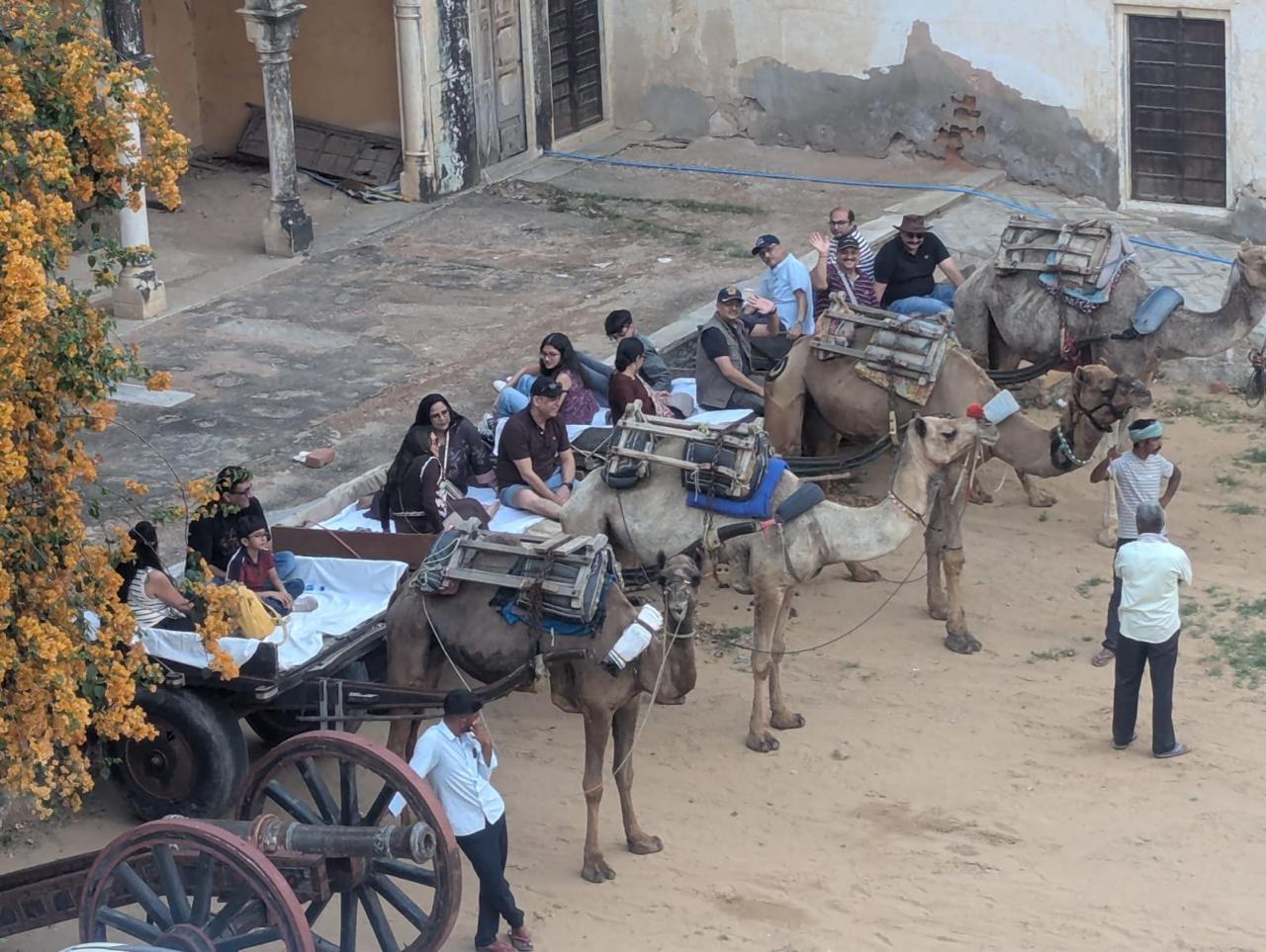
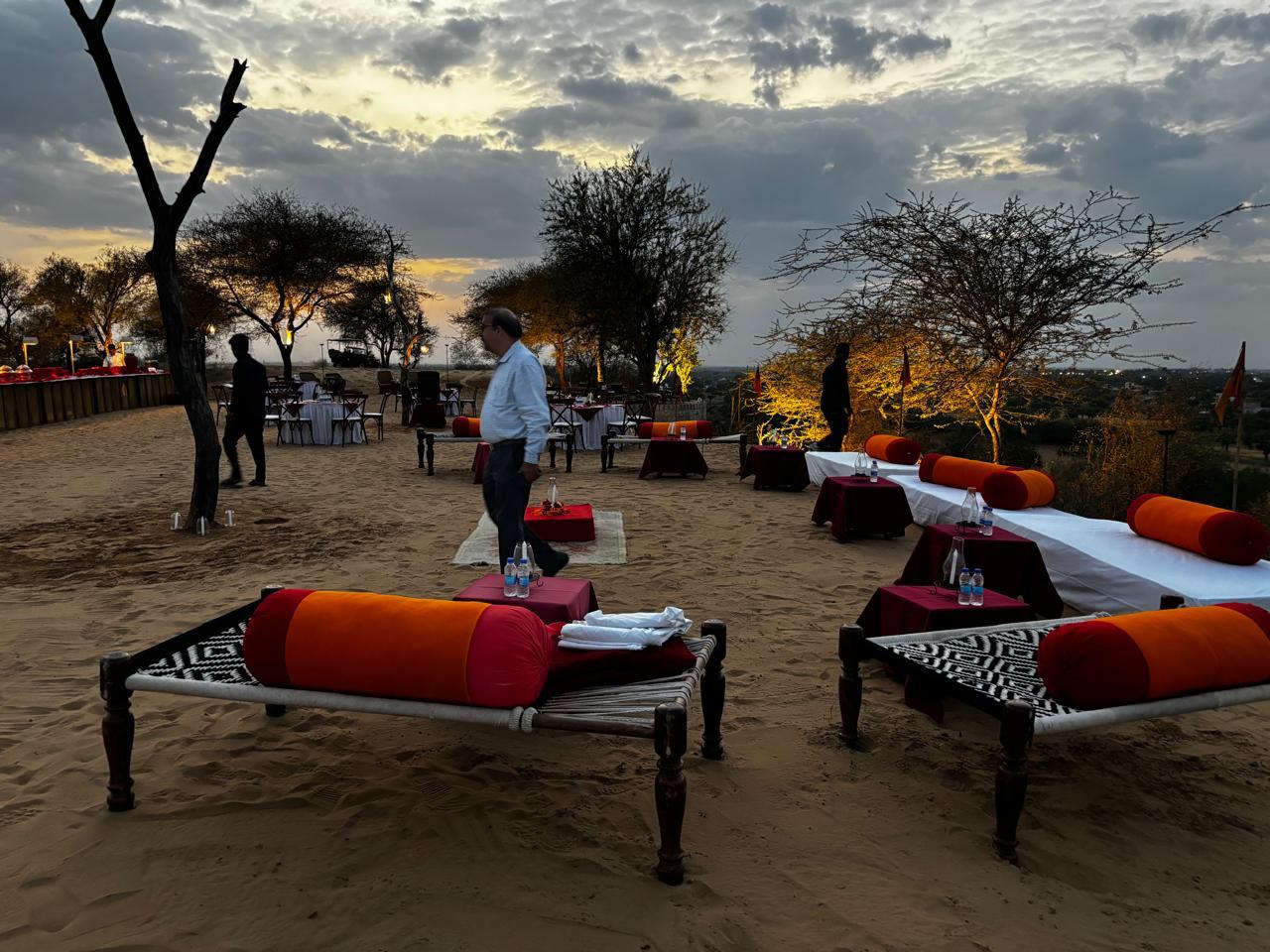
On arrival at Castle Mandawa on 28 March, participants checked in, had lunch and had time to relax. The programme then moved into the cultural setting that had been carefully planned for the group. A curated high-tea experience was followed by a camel-cart ride towards the dunes, culminating in a specially arranged desert dinner with music and traditional décor. The evening at the dunes, under the Rajasthani sky, provided a memorable beginning to the meeting. The itinerary records the camel-cart ride, dune dinner with music and return to the hotel later in the evening.
Discovering the Heritage of Mandawa
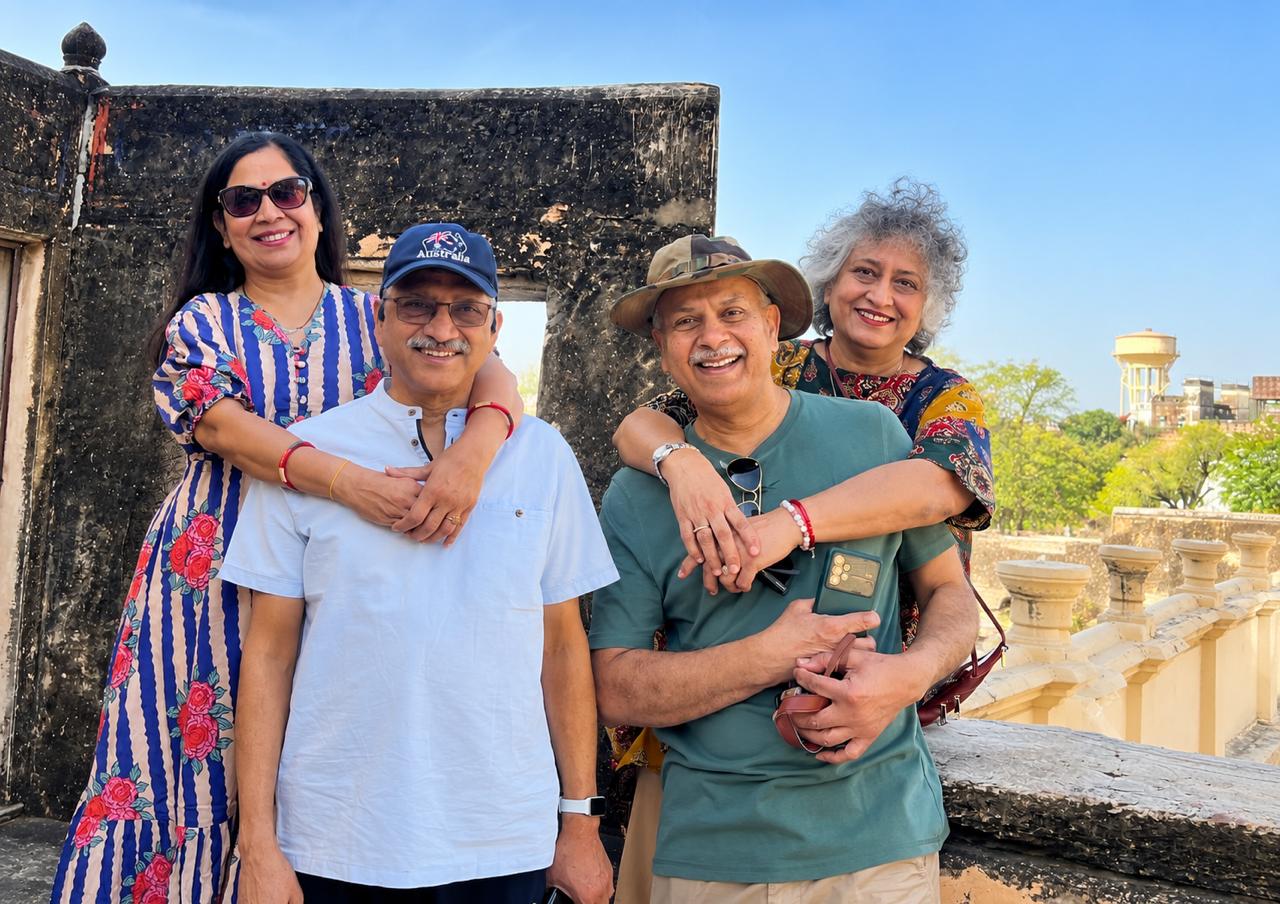
The morning of 29 March began with a guided heritage walk through Mandawa. Members and families had the opportunity to experience the historic havelis, architecture and cultural character of the town. The two-hour guided walk was followed by lunch at Castle Mandawa.
For many participants and particularly the children, this was an opportunity to experience Rajasthan beyond the conventional tourist circuit. The combination of heritage, architecture, local culture and family interaction added a completely different dimension to the annual meeting.
Spine Manthan – The Academic Core
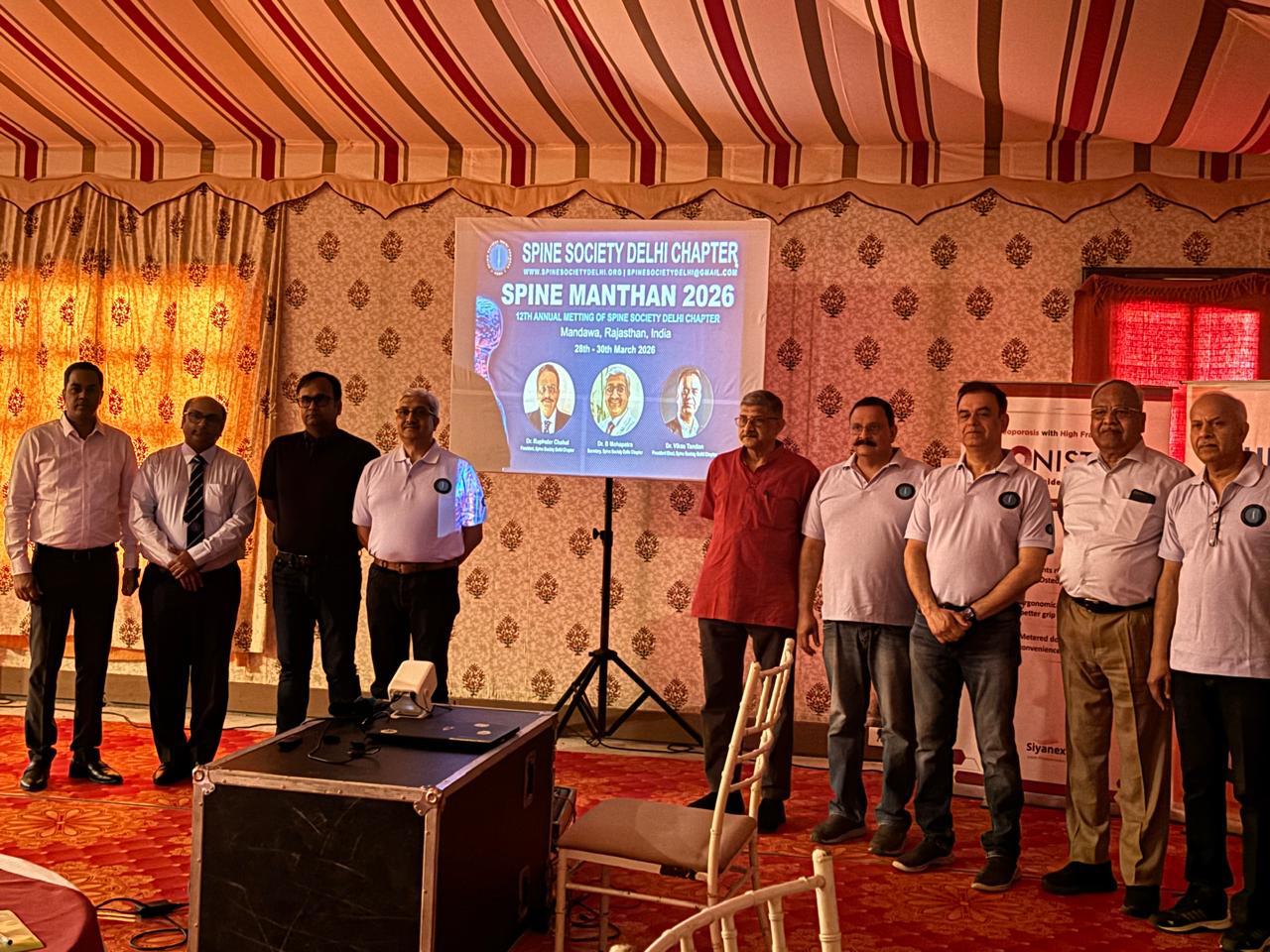
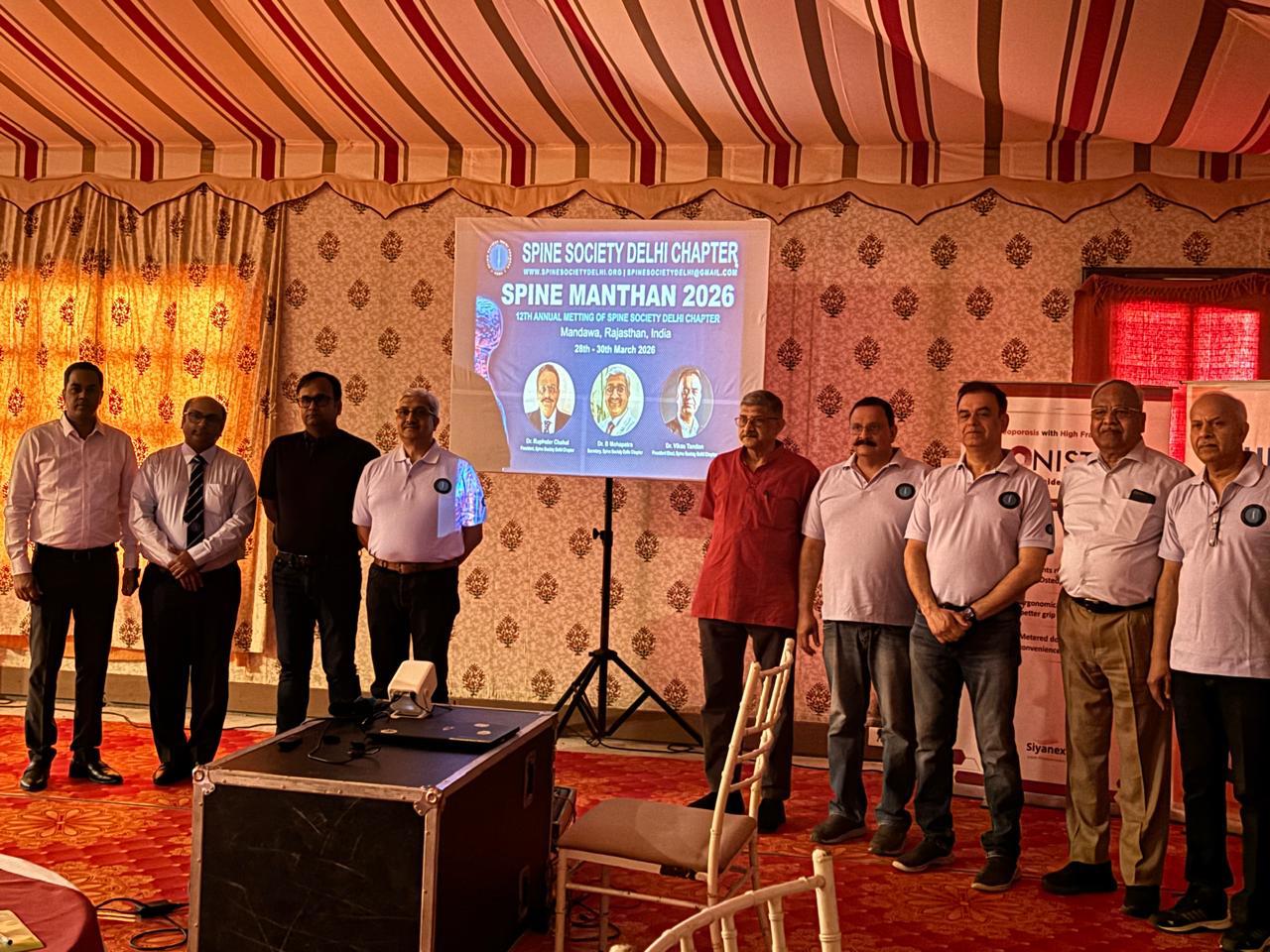
The academic programme, “Spine Manthan 2026,” was held on the afternoon of 29 March, from approximately 2:30 PM to 6:00 PM.
The programme began with the Welcome Address and Opening Remarks by the President, Spine Society Delhi Chapter, followed by the launch of the third edition of The Delhi Spine Times. The launch was particularly significant because the newsletter had become an important platform for documenting the Society’s academic activities, achievements and people. The Presidential Address had already described The Delhi Spine Times as more than a publication, a reflection of the Society’s collective identity and specifically looked forward to its third edition being released at Mandawa. president address
The meeting then witnessed the ceremonial handover of charges from the outgoing Executive Committee to the incoming Executive Team, symbolising continuity and renewal within the Society.
The scientific programme was deliberately case-based and interactive, rather than consisting solely of conventional lectures. It included approximately three cases on degenerative lumbar spine, with dedicated time for presentation and discussion, followed by a session of miscellaneous interesting cases presented by SSDC members. The programme also included a unique wellness-oriented session, “Heal Yourself with Ho’oponopono,” by Ms Ritu Tandon, along with opportunities for tea and networking.
This format encouraged participation and discussion and retained the informal, interactive character that has increasingly become a hallmark of SSDC programmes.
The Secretary’s Report records the broader academic growth of the Society during the 2024–26 tenure, including the Master Class Series, continuing bi-monthly meetings, the first SSDC cadaveric spine workshop, the Prof. Arvind Jayaswal Travelling Observership and the Society’s international meeting in Baku. SSDC Secretary report 2024-26
The Third Edition of The Delhi Spine Times
The launch of the third edition of The Delhi Spine Times was one of the important highlights of Spine Manthan 2026.
The newsletter has evolved into a record of the Society’s academic and social journey, highlighting achievements of members, educational initiatives, meetings, conferences and activities of the Chapter. Its journey began with its launch at the Society’s first international meeting in Baku and continued with subsequent editions. SSDC Secretary report 2024-26
Its third edition, therefore, was appropriately launched at an event that itself represented the diverse character of SSDC—academic, social, cultural and humanitarian.
Spine Health Outreach – Academic Knowledge into Community Service
A particularly important component of Spine Manthan 2026 was the Society’s commitment to community service.
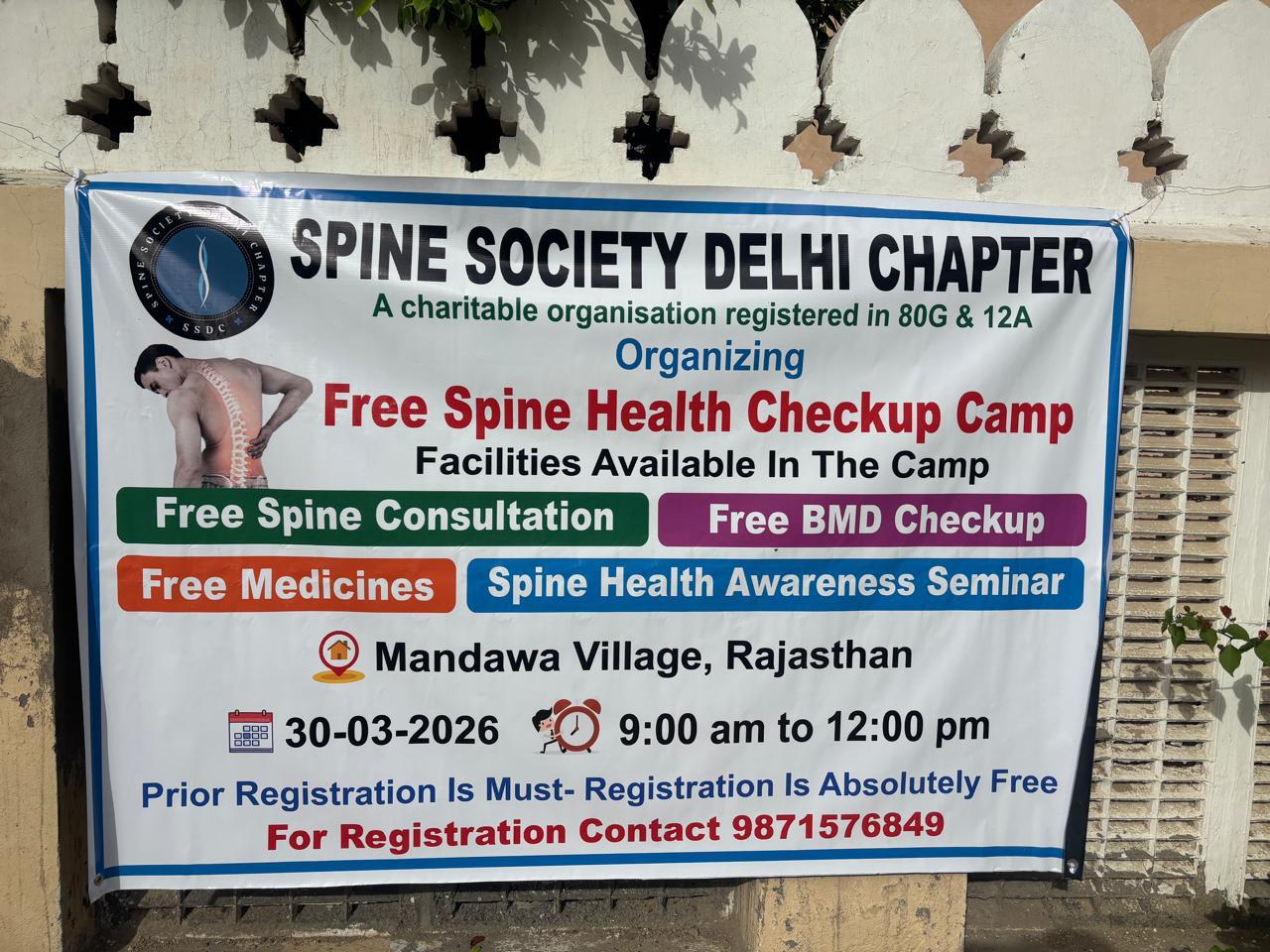
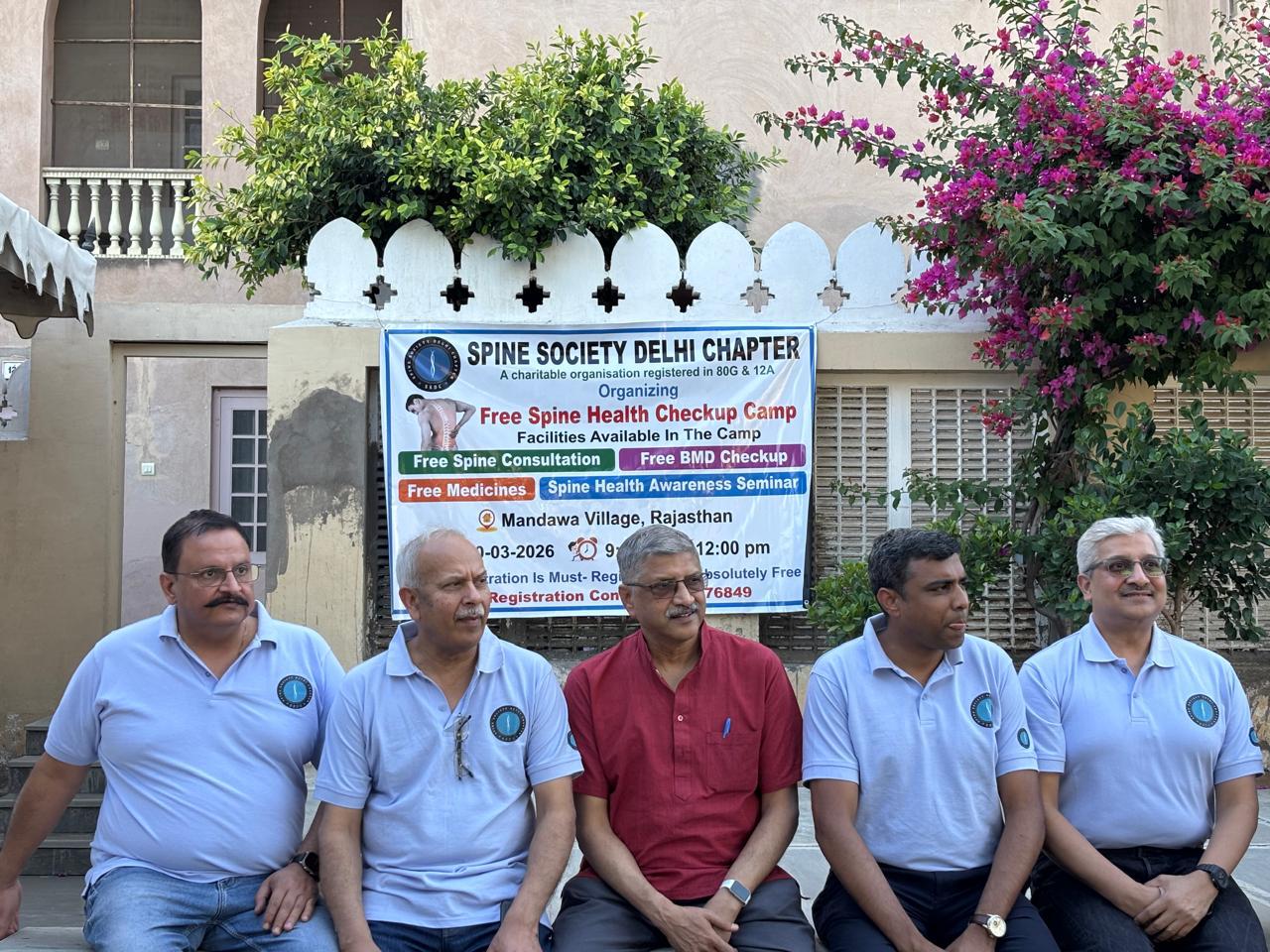
On 30 March, before the group departed for Delhi, SSDC conducted a free Spine Health Check-up and Awareness Camp in Mandawa. Approximately 250 patients were registered for the medical camp. The programme included spine consultation, BMD assessment, medicines and spine-health awareness. The initiative also focused on preventive health, bone health and awareness about appropriate strategies for spinal disorders.
The official itinerary records the medical camp from 9:00 to 11:00 AM on 30 March, followed by check-out and departure for Delhi.
This outreach programme was particularly meaningful because it demonstrated that the Society’s responsibility extends beyond conference halls and operating theatres. As the Presidential Address aptly put it, the Society’s medical camps, outreach programmes and Mandawa initiative represented “skill with compassion, knowledge with service.” president address
The Society’s charitable orientation has also been strengthened institutionally, with its 80G and 12A certifications, enabling it to undertake charitable activities and receive eligible donations. SSDC Secretary report 2024-26
An Evening of Families, Friendship and Rajasthan
The academic programme was complemented by one of the most enjoyable evenings of the meeting the Gala Dinner at Sajjan Bagh.
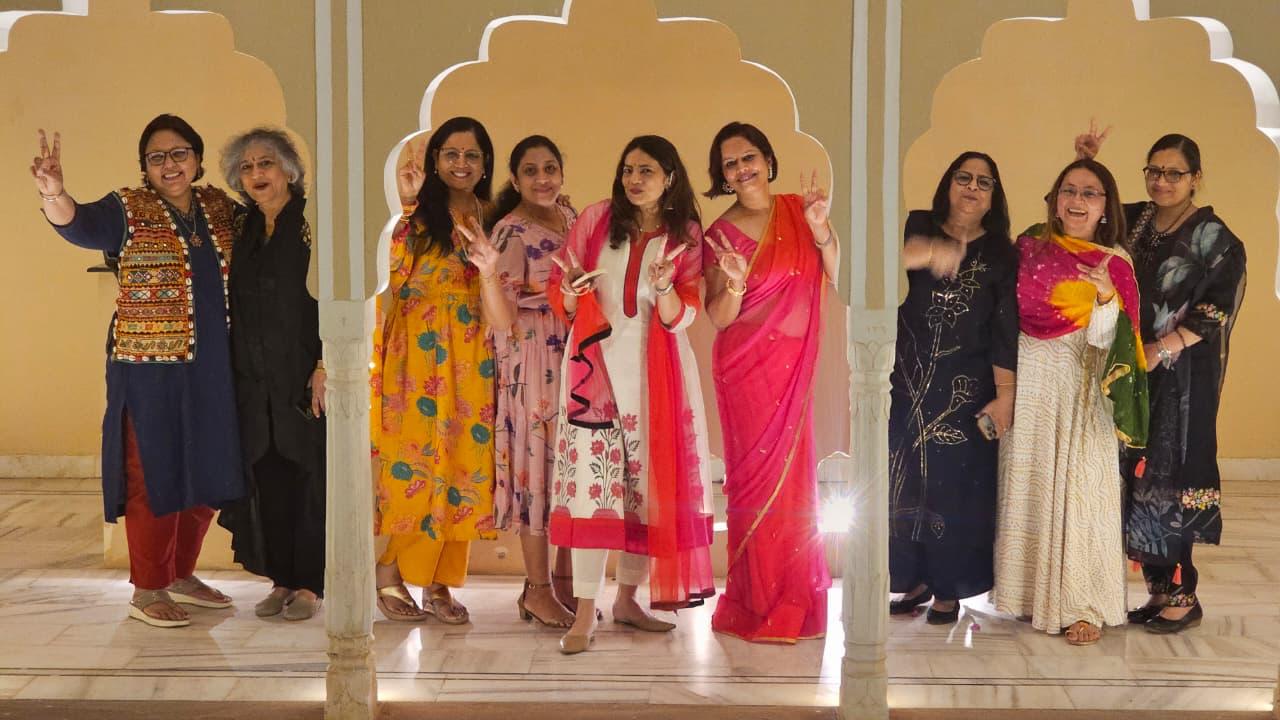
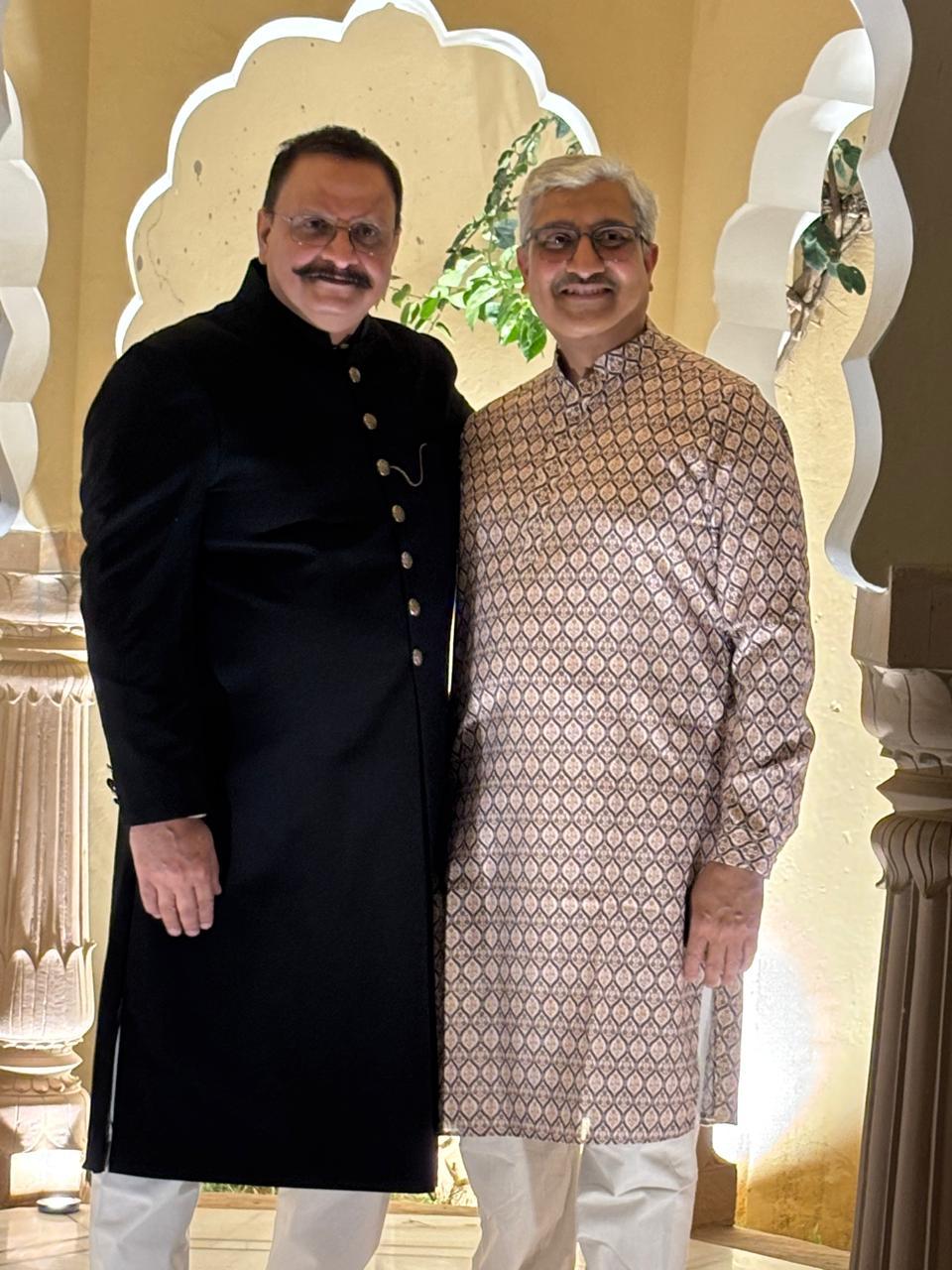
With cocktails, an enhanced dinner, snacks, folk singers and traditional dancers, the evening brought together doctors, spouses and children in a relaxed atmosphere. The dress suggestion of traditional ethnic wear added to the Rajasthani ambience.
This was perhaps the defining feature of Spine Manthan 2026: families were not accompanying the doctors, they were part of the meeting itself.
Children enjoyed the open spaces, cultural activities and informal interaction, while colleagues who normally meet in operating rooms, conferences and academic meetings had an opportunity to spend unhurried time together as friends and families.
The People Behind Spine Manthan
No successful Society programme is the achievement of one individual. The Secretary’s Report acknowledges the collective contribution of the Executive Committee, members, faculty, sponsors, organising teams, residents and fellows. SSDC Secretary report 2024-26
The Executive Committee during the tenure included Dr. R. S. Chahal as President; Dr. Bibhudendu Mohapatra as Secretary & Treasurer; and Drs. Ankur Nanda, Saurabh Kapoor, Neeraj Gupta, Kanwaljeet Garg, Kalidata Das and Gururaj (Co-opted Member–Education). SSDC Secretary report 2024-26
Behind the formal structure, however, were numerous members who contributed their time, ideas and energy to make the meeting possible. Dr. Bibhudendu Mohapatra deserves special mention for his steadfast work as Secretary and for translating plans into execution. Satish, described by the President as the “silent force” and backbone of the Society, played an invaluable role in ensuring that the various activities ran smoothly. president address
The contribution of Amit and Ekta to the organising effort across multiple Society events was also significant, as was the contribution of the many members who participated in planning, coordination, academic discussions and family activities.
And, as always, the Society benefited enormously from the guidance of its senior members. Dr. Shankar and Dr. Chhabra continued to serve as sources of advice, mentorship and institutional wisdom. The President’s Address also acknowledged the influence of stalwarts including Professor Jayaswal, Dr. Rajender Prasad, Colonel Madan and Rushama Ma’am, whose contributions have helped shape the Society over the years. president address
A Society That Continues to Evolve
Spine Manthan 2026 also came at an important moment in the history of SSDC—a moment of leadership transition.
The meeting witnessed the ceremonial handover of responsibilities from the outgoing Executive Committee to the incoming leadership. Dr. Vikas Tandon, who had served as President-Elect, took over the responsibility of leading the Society into its next phase. In his Presidential Address, Dr. Chahal expressed complete confidence in Dr. Tandon, describing his integrity, calm demeanour and commitment as qualities that would serve the Society well. president address
The transition represented not an ending, but a continuation of the Society’s journey.
Over the preceding tenure, SSDC had strengthened its academic calendar, expanded digital communication, revamped its website, streamlined online membership and fellowship processes, developed educational programmes and introduced new initiatives such as the cadaveric workshop and the Prof. Arvind Jayaswal Travelling Observership. SSDC Secretary report 2024-26
The new Executive Committee now carries forward this foundation with the opportunity to build further on it.
More Than an Annual Meeting
Spine Manthan 2026 will be remembered not simply as another annual conference.
It was a meeting where academic discussion happened alongside family bonding; heritage exploration alongside professional networking; and specialist medical knowledge alongside community service.
It demonstrated that a professional society can create spaces where colleagues learn from one another, senior members mentor the next generation, families become part of the Society’s community, and the collective expertise of doctors reaches people who may otherwise have limited access to specialised spine care.
The three days in Mandawa brought together everything that the Spine Society Delhi Chapter aspires to represent: Excellence in academics, friendship in fellowship, inclusion of families, respect for heritage and commitment to society.
As the outgoing President reflected while handing over the reins, leadership may change, but the vision continues.